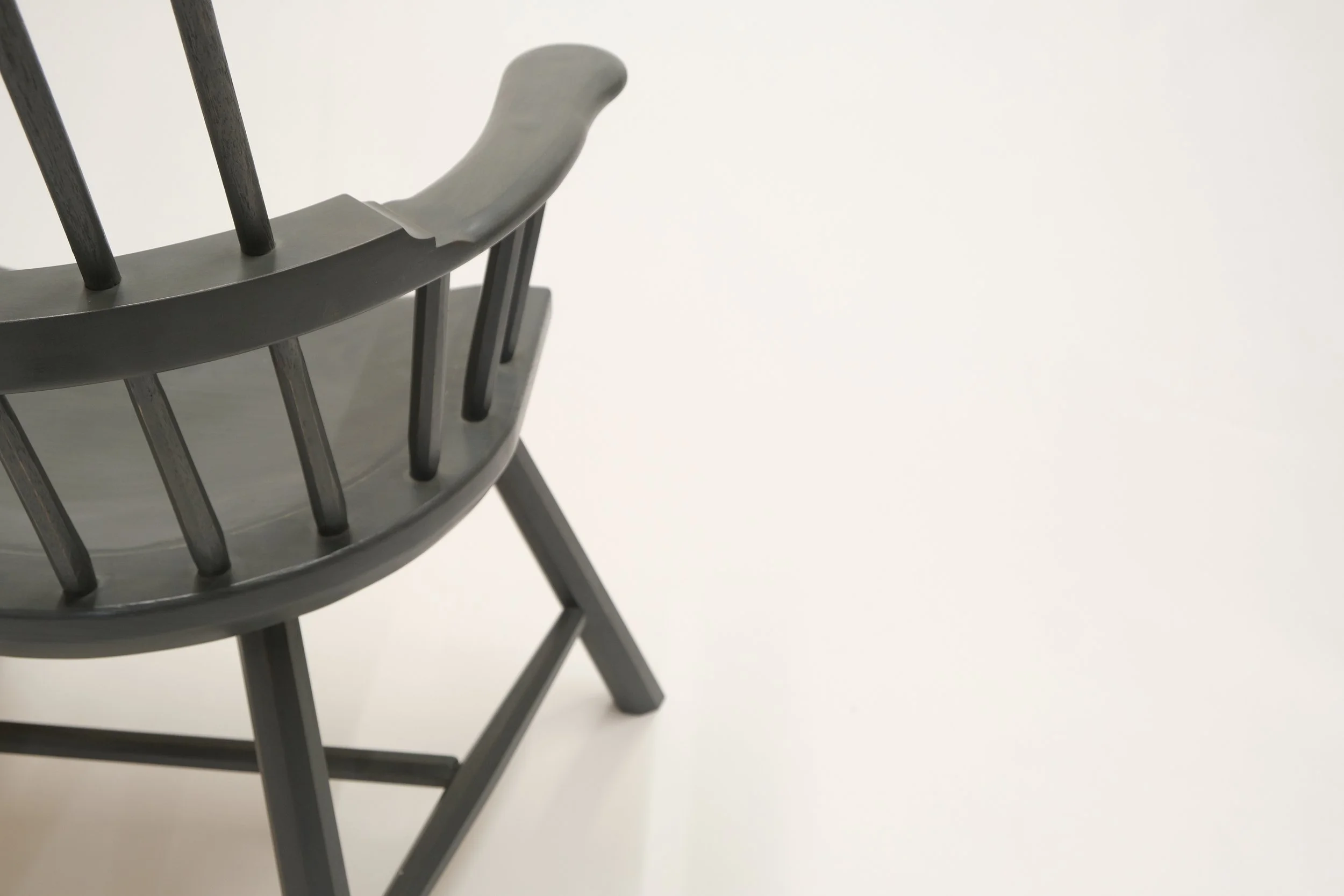
What are Welsh stick chairs?

The term “stick chair” refers to a chair that begins it’s life as a plank of wood for the seat. All the remaining parts such as the legs, sticks and arms are connected to the seat with round joinery. Stick chairs are made with simple tools and readily available materials, but most importantly, they are not mass-manufactured.

Welsh stick chairs were the predecessor of what was to become the more commonly known Windsor chair. It has been thought that they were also the inspiration for the Shaker furniture movement in America.

Stick chairs are unique in the sense that they were not originally made by fine furniture makers; they were chairs made through necessity and so were made by country folk including farmers and wheelwrights, and sometimes the village carpenter, all originating in rural Wales.

The wood for these chairs was found growing in hedgerows and woodlands, making each chair individual, with their shape determined by the natural character of the wood. No two Welsh stick chairs were the same, all displaying a variety in number of sticks, shape of seat, or stretch of back. Today these chair designs are revived here in the Castell Carreg workshop. Antique chairs have been analysed and made up to date, all with a similar ethos – build strong, light, comfortable furniture, with what you have. Made well, built to last.

The studio is located beneath the legendary Folly Tower on the Mamhilad Park Estate near Pontypool, South Wales, inspired by the local landscape and of traditional Welsh craft processes, chairs are built one by one, using various tools and technological processes that are available to hand. This ethos of building strong light furniture with what you have, is a tradition that goes back over 100 years.

The furniture that is made in the studio often uses tapered octagons, similar in appearance to that of the original Welsh country styles from which they derive. The term stick chair or Welsh Windsor chair refers to a chair that has it’s components that steam from a seat, and were often made by country folk using tools and materials that they had to hand. Although simple in aesthetic, an intimate knowledge of the material was required to build strong, light, functional chairs that last - there are many examples that have lasted well over a century!

In the studio work is made quietly, finding the natural rhythm of working, tuning into the sounds of the space, and letting the wood sing. Each project is carefully navigated with mindfulness and precision. Some work has a natural oil finish where appropriate, while others has a historic milk painted surface, available in a range of colours. A visit to the gallery is recommended to see the work on display and to view the various finishes available for your chair. Work is continuing to be added to the gallery on a regular basis, so do check in again to see the latest finished projects on display.